


Which Cooking Oil Should You Use? A Cozy Guide to Cooking Oil Explained 🤍🍄🟫
- Nina Meek
- Dec 27, 2025
- 5 min read

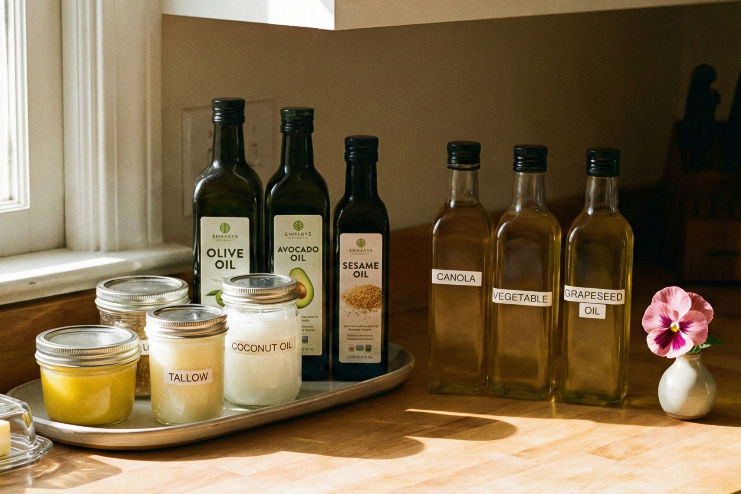
If you’ve ever stood in front of the oils at the store like… wait, why does this feel stressful, you’re not alone.
Cooking oil used to be simple. You grabbed what you had and made dinner. Now it’s smoke points, cold-pressed labels, scary graphics, and everyone on the internet yelling.
So let me say this gently first.
You’re allowed to feed yourself without panic. 🤍
Why cooking oils are important, in real life

Different oils have different flavors, and they handle heat differently. Some people love having one oil for everything. Some people feel calmer having a few options depending on what they’re cooking.
The goal is not to have the “perfect” oil.
The goal is to have oils that feel trustworthy, taste good to you, and work for your cooking style.
Cooking oil explained, what “quality” actually means

If you want one simple rule, it’s this. Look at how the oil was made.
Some oils are extracted using chemical solvents (like hexane). Others are made by pressing seeds or fruit. If you want to avoid chemically-extracted oils, look for labels like cold-pressed or expeller-pressed.
You don’t have to memorize everything. Just start checking labels like you’re taking care of future you.
Smoke point, the one thing worth knowing

Smoke point is the temperature where an oil starts to burn and smoke.
When oil burns, it can taste bitter, and it can create compounds you probably don’t want. Knowing smoke point is basically a cozy cooking skill because it keeps food tasting clean and calm.
Here’s the simplest way to think about it:
Lower smoke point oils are better for low heat cooking, finishing, drizzling, dressings.
Higher smoke point oils are better for searing, frying, high heat roasting.
That’s it. No fear required.
The oils most people actually use

You’ll see these nine all the time, and they each have a place. Let’s make them feel simple.
Olive oil

Extra virgin olive oil is pressed from olives, and it can taste strong or mild depending on the variety. It’s famous in Mediterranean cooking for a reason.
Best for: dressings, drizzling, gentle sautéing, medium heat cooking
Why people love it: flavor, antioxidants, everyday ease
Watch for: quality varies a lot, extra virgin is usually the go-to if you want the most “real” version
Avocado oil

Avocado oil is pressed from the fleshy part of the avocado. It tends to have a high smoke point and a more neutral taste.
Best for: higher heat cooking, roasting, frying, when you don’t want strong flavor
Why people love it: heat-friendly, no flavor
Watch for: can be expensive, quality matters here too
Coconut oil

Coconut oil is pressed from coconut pulp. It can be solid at room temp and has a noticeable flavor.
Best for: baking, higher heat cooking, cozy sweet recipes, certain savory dishes where coconut fits
Why people love it: stable for heat, unique flavor, widely available
Watch for: the flavor is real, it will show up in your food
Butter

Butter is one of the coziest fats, but it has a lower smoke point.
Best for: low heat cooking, finishing, eggs, sauces, warm rice, cozy flavor moments
Why people love it: comfort, richness, real taste
Watch for: it can burn faster, keep the heat gentle
Ghee

Ghee is clarified butter, meaning the milk solids are removed. That’s why it handles higher heat better than butter. And tbh this is my favorite
Best for: sautéing, roasting, higher heat cooking when you still want buttery vibes
Why people love it: higher smoke point than butter, rich flavor
Watch for: can cost more, not everyone has it stocked
Sesame oil

Sesame oil is pressed from sesame seeds and has a nutty, strong flavor.
Best for: flavor finishing, Asian and Indian-inspired cooking, sauces
Why people love it: a little goes a long way, aroma is amazing
Watch for: quality varies, some are refined, some are toasted, very different flavors
Canola oil

Canola oil is produced from rapeseed (often GMO). It’s commonly used because it’s cheap and neutral.
Best for: general cooking when budget matters
Why people use it: accessible, neutral
Watch for: often highly processed, some versions use chemical extraction
Vegetable oil

Vegetable oil can be a blend of different seed oils (like soybean, sunflower, safflower, and others). It’s usually very neutral.
Best for: general cooking, frying, baking when you need neutral
Why people use it: inexpensive, everywhere
Watch for: processing varies, some are hydrogenated, some are blends, labels matter
Grapeseed oil

Grapeseed oil is pressed from grape seeds. It has a neutral flavor and a high smoke point.
Best for: high heat cooking, baking, sautéing when you want neutral
Why people use it: high smoke point, clean flavor
Watch for: often higher in omega-6 fats, and quality varies
About those “good oils vs bad oils” graphics

If you’ve seen those posts that say “never cook with this” and list a bunch of oils, I get why it can make you anxious.
Here’s the truth.
A lot of the concern comes from how certain oils are processed, and how some oils behave under high heat, especially if they’re reused for frying over and over. That’s a real conversation.
But you don’t need to turn dinner into a courtroom.
If you want a calm way to decide, focus on two things:
How it was made Look for pressed options when you can, avoid mystery blends when possible.
What heat you’re using Match your oil to your cooking temperature so it doesn’t burn.
That’s already a huge upgrade, without spiraling.
A cozy oil system that makes everything easier

If you want the simplest setup that covers most home cooking, this is the one I like:
One flavor oil: extra virgin olive oil
One high heat oil: avocado oil
One comfort fat: butter
Optional: coconut oil if you love that flavor
That’s it.
Four max. You do not need twelve bottles.
How to choose based on what you’re cooking

If you’re standing there mid-recipe, here’s the quick cozy guide:
Salad dressing, drizzling, finishing: olive oil
High heat searing, roasting, frying: avocado oil
Baking or coconut vibe: coconut oil
Cozy flavor at the end: butter
A few storage tips that quietly protect flavor

Oils are sensitive to light and heat.
Store them in a darker cabinet, not next to the stove if you can
Close lids tight
If an oil smells stale, sharp, or weirdly waxy, trust that and replace it
This isn’t strict. It’s just care.
Things That Help 🤍

You don’t need everything. You really don’t.
But if you want a small cozy setup that makes cooking feel easy and steady, these are the basics I’d actually keep:
Extra virgin olive oil
A wooden cutting board and a sharp knife, because the calmer your prep feels, the calmer cooking feels
If this spoke to you, you might love reading this too ✨

If you’re trying to build a from-scratch life without turning it into a project, this is the same cozy energy.
How to Start Cooking From Scratch Without Turning It Into a Project, Cozy Cooking ✨https://www.cozycookingbynina.com/post/how-to-start-cooking-from-scratch-without-turning-it-into-a-project-cozy-cooking
The hug 🤍🍄🟫
If you’ve been worried you’re choosing wrong, I want you to breathe.
You don’t need perfect oils to cook well.
You need a few options you understand.
You need to know what heat you’re using.
You need food that tastes like care.
Start with one oil you trust. Add one more when it makes sense. That’s enough.
If this spoke to you, you can subscribe here. I send weekly notes, not noise. 🤍
This was Which Cooking Oil Should You Use? A Cozy Guide to Cooking Oil Explained


Comments